FAMOUS ARTISTAdamson-Eric
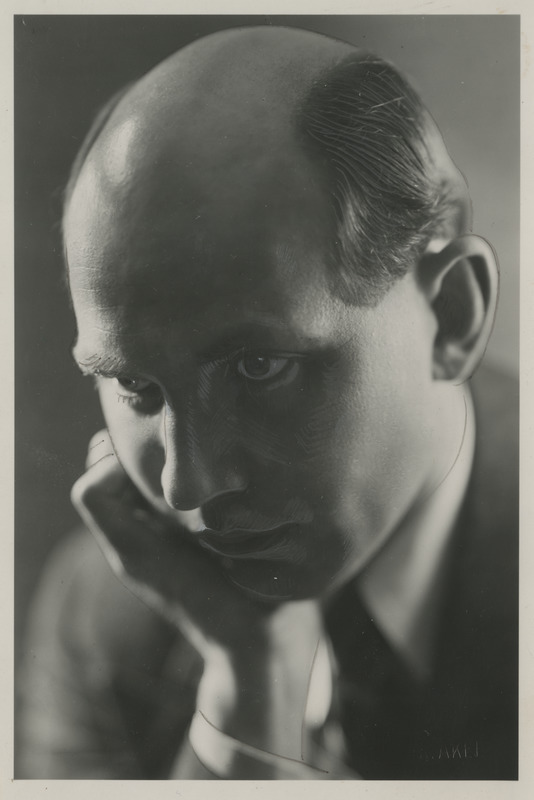
Adamson-Eric (born Erik Karl Hugo Adamson) is one of the most brilliant representatives of Estonian modernism, a legendary figure who became a symbol of universalism in art. He was born into a large family in Tartu and received his early education at home before attending Kooritsa Primary School. He later studied at two Tartu gymnasiums — the I Alexander School and the Hugo Treffner Gymnasium. From 1920 to 1923, he audited lectures at the Faculty of Law of the University of Tartu while also studying at the “Pallas” Art School. In 1923–1924, he continued his education in Berlin at the Charlottenburg School of Arts and Crafts under Professor H. Begen. From 1924 to 1927, he lived in Paris, attending several free academies, including the Académie Colarossi, the Académie Ranson, and the Académie de Montparnasse, where he studied under Roger Bissière, Georges Braque, André Lhote, and others. Through his extensive travels across Europe, he became one of the most cosmopolitan Estonian artists of his time.
In 1941, he was evacuated to the Soviet rear. In 1942, he served as the chief artist of the Estonian State Art Ensembles in Kuibyshev, and later in Yaroslavl. He was awarded the title of Honored Art Worker of the Estonian SSR in 1943. From 1945 to 1949, he served as director of the Tallinn State Institute of Applied Arts and became a professor in 1946. He received the Estonian SSR Prize in 1947.
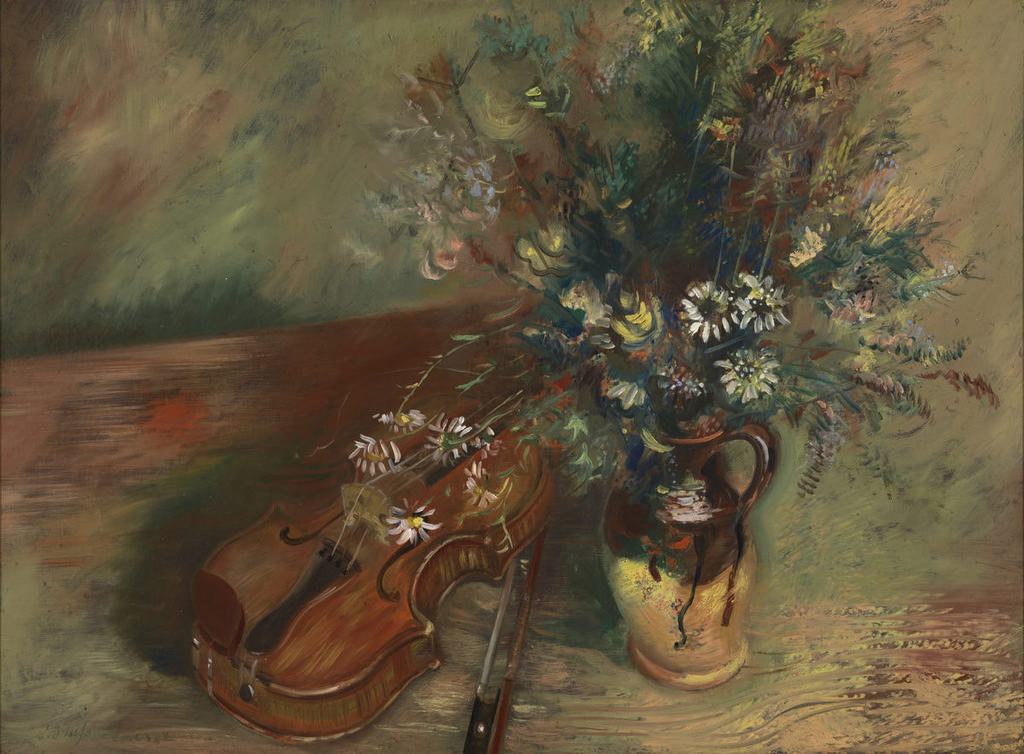
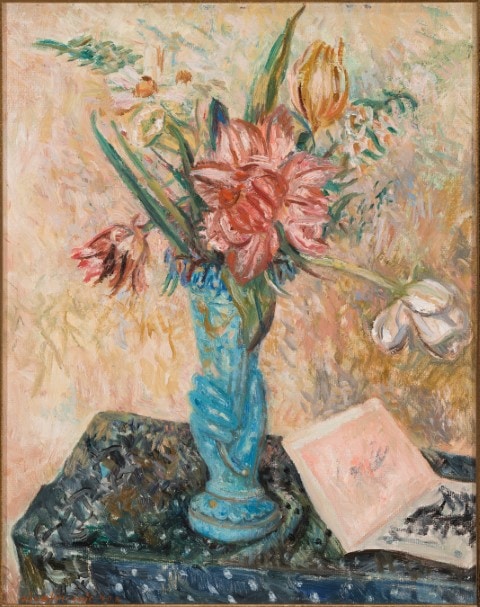
Adamson-Eric’s creative work spans four decades and impresses with its remarkable diversity. He was equally accomplished in painting and in nearly all areas of applied art and design — ceramics, porcelain painting, leatherwork, metalwork, and textiles. His painting is distinguished by a subtle sense of color, impeccable taste, and elegant wit. The French school of painting decisively influenced his aesthetic: in the 1920s, he approached Surrealism and Cubism with playful freedom, captivated by the plasticity of the New Objectivity.
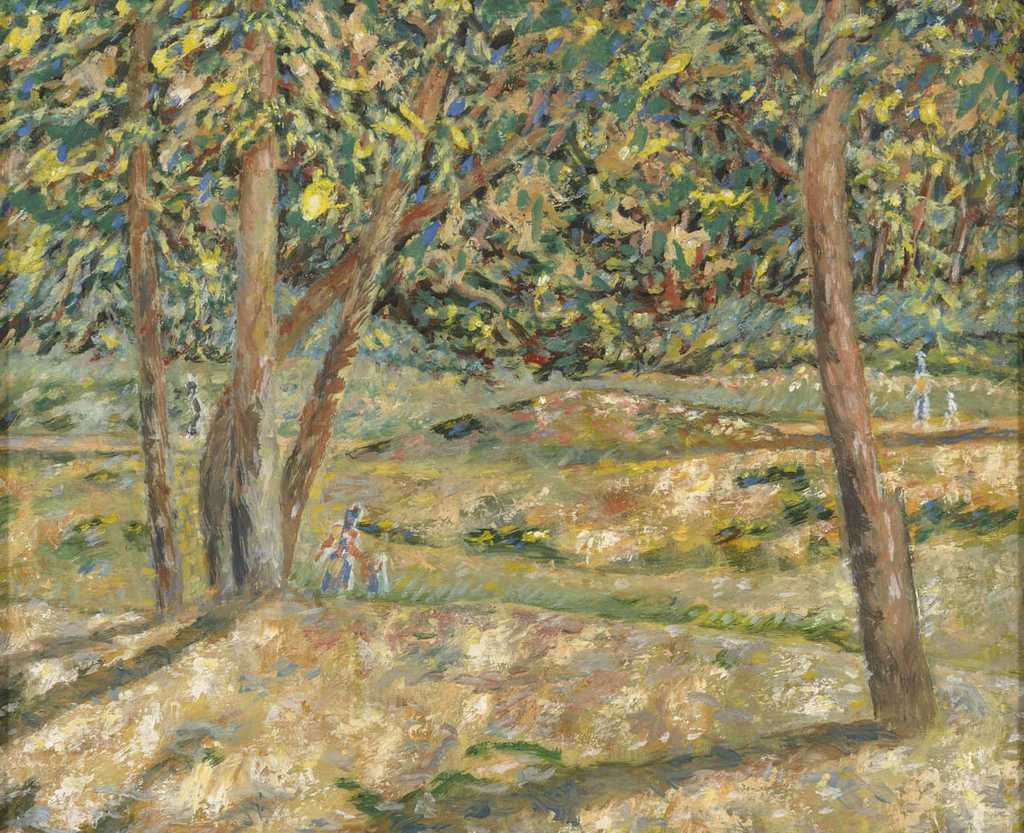
In the second half of the 1930s, his style became more painterly, his colors gained luminous intensity, and his light, dancing brushwork established him as one of Estonia’s significant late Impressionists.
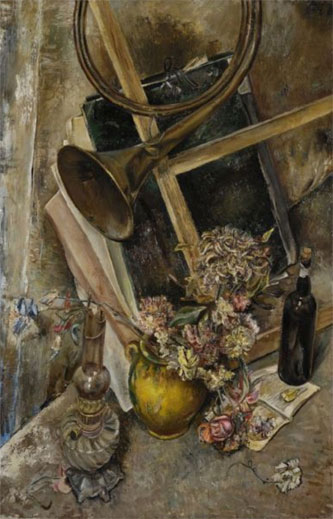
In the 1960s, even after being forced to paint with his left hand, he turned to abstraction with scholarly passion, creating precisely calibrated abstract compositions and around a thousand works on ceramic tiles. Major solo exhibitions included shows in 1962 (Tallinn Art Hall and Moscow — over 900 works), 1967 (Tartu Art Museum—over 500 works), and 1968 (Kaunas).
In 1949, Adamson-Eric was accused of “formalism” and removed from his position as director. In 1950, he was expelled from the Union of Artists of the Estonian SSR. From 1951 to 1953, he worked as a laborer at the Kommunar shoe factory. In 1955, he suffered a severe heart attack followed by a stroke, which left the right side of his body paralyzed. Through four years of persistent training and incredible willpower (1955–1958), he taught himself to paint with his left hand and returned to creative work. He spent his summers in Lohusalu, where the environment aided his recovery and artistic practice. His widow, Mari Adamson, donated over 1,000 works to the Art Museum of Estonia on the condition that they be preserved and exhibited as a unified collection. Thanks to this bequest, the Adamson-Eric Museum was opened in Tallinn’s Old Town on Lühike jalg Street in 1983.